



The challenge
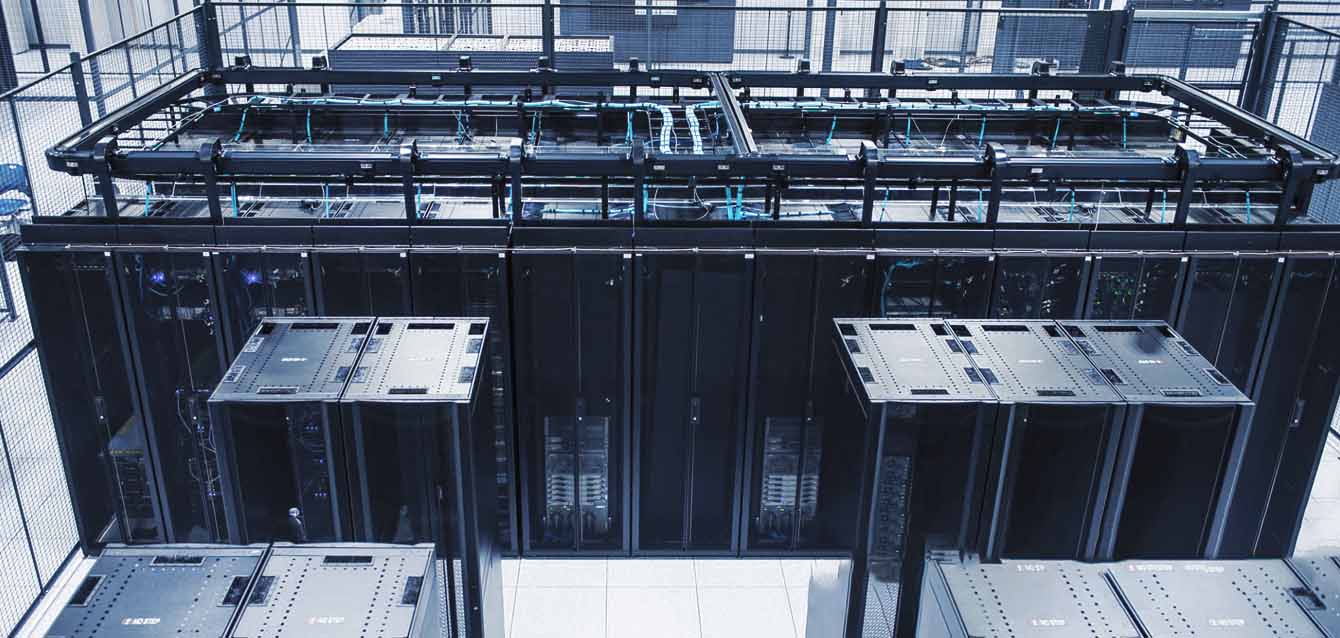
A fast-growing enterprise preparing to operationalize large-scale AI workloads faced a common but high-stakes reality: traditional data centre design principles were no longer sufficient. Their roadmap required high-density GPU infrastructure capable of supporting GenAI training, model fine-tuning, and latency-sensitive inference—yet the existing facility constraints threatened performance, reliability, and time-to-production.
The primary challenge was sustained heat and power concentration. GPU servers can push rack densities far beyond conventional compute stacks, and the client’s planned expansion would quickly exceed safe thermal limits if airflow, containment, and cooling control were not engineered with precision. Early assessments showed signs of temperature inconsistency, hotspot formation, and inefficient airflow paths—all of which could lead to GPU throttling, instability during peak training cycles, and shortened equipment lifespan.
Power was equally critical. The organization needed a design that could deliver stable, redundant, and measurable power at the rack level while maintaining headroom for future expansion. Existing distribution lacked clear visibility into rack utilization patterns, circuit balancing, and redundancy behavior under failure conditions. Without a modern power architecture, the client risked nuisance trips, unpredictable load behavior, and limited scalability.
Finally, there were operational constraints. The client needed to go live on a tight timeline, but reliability could not be compromised. They required end-to-end monitoring, alerting, and operational runbooks to support 24×7 data centre operations, plus a commissioning approach that validated thermal, electrical, and network readiness before production cutover. In short: they needed a modern, GPU-ready data centre foundation that delivered performance now and scale later.
Solutions
Maayan Technologies delivered a GPU-first data centre build designed around efficiency, reliability, and controlled expansion. The engagement followed a structured approach: assess, design, implement, validate, and operationalize.
1) GPU Pod Planning & Rack Architecture
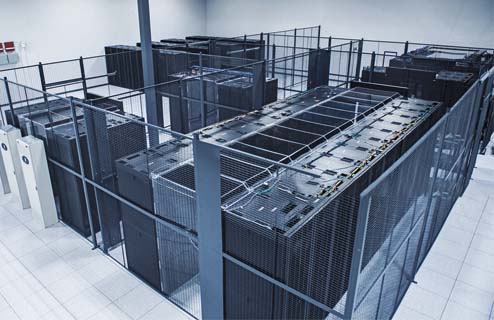
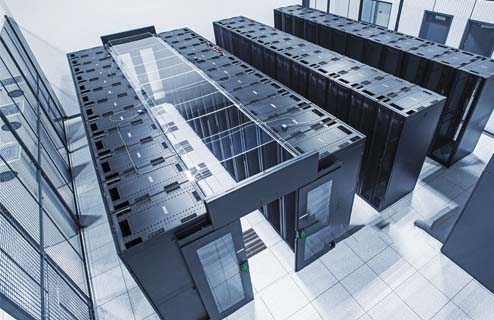
We designed the data centre layout around high-density AI pods, separating GPU compute zones from storage and networking zones to simplify airflow control, cable routing, and maintenance. Rack layouts were engineered with front-to-back airflow alignment, blanking panels, and standardized cable pathways to minimize recirculation and reduce thermal turbulence. This pod-based structure ensured the facility could scale by adding pods rather than redesigning the whole floor.
2) Cooling Engineering with Hot/Cold Aisle Containment
To address heat density and eliminate hotspots, we implemented a cooling strategy based on hot/cold aisle containment and airflow optimization. This included sealing leakage paths, improving rack-level airflow discipline, and aligning supply and return airflow patterns to match GPU server requirements. Where density required additional support, the design incorporated options for in-row cooling and liquid-ready readiness (such as rear-door heat exchange capability or provisioned space and routing for future liquid cooling), ensuring the facility could grow into higher densities without disruption.
We also introduced a disciplined approach to maintaining stable inlet temperatures across GPU racks. Thermal mapping and controlled tuning reduced temperature variance between racks and helped stabilize performance during sustained load.
3) Power Architecture Built for High-Density Compute
We modernized the power design with a focus on redundancy, safety, and observability. The solution included A/B power feeds, intelligent rack PDUs, and structured power distribution engineered for high rack densities. We implemented power budgeting per rack—factoring GPU/CPU draw, networking overhead, peak utilization, and future growth headroom—so each pod could operate predictably under maximum load.
To improve resilience, the design incorporated appropriate UPS sizing and battery runtime planning based on the client’s operational requirement. Circuit balancing and load distribution practices were applied to reduce the risk of overload events while improving overall power stability.
4) GPU-Ready Networking & Structured Cabling
High-density compute is only valuable if the network can keep up. We designed a high-throughput switching architecture suitable for AI workloads, with structured fiber/copper cabling, clean labeling, and service loops for maintenance. The design prioritized low-latency paths between GPU nodes, storage, and core network systems, ensuring the infrastructure could support both training traffic patterns and production inference demands.
5) Monitoring, Controls & Operational Readiness
To ensure production stability, we enabled rack-level monitoring for power and temperature and aligned it with centralized DC operations visibility. Alerting thresholds and escalation policies were defined to support rapid response. We delivered operational documentation including SOPs, maintenance guidelines, and runbooks for common events—temperature alarms, power anomalies, network link issues, and planned capacity changes.
6) Commissioning & Validation Testing
Before go-live, we executed a structured commissioning process that validated the environment under stress. Thermal performance, power behavior, and network readiness were tested to ensure the data centre could sustain real GPU workloads—not just idle conditions. This reduced deployment risk and ensured confidence at cutover.
Key Outcomes
The result was a modern, scalable, and efficient environment built specifically for high-density GPU computing:
Stable thermal performance for GPU racks, reducing hotspot risk and minimizing performance throttling during sustained workloads.
Predictable, redundant power delivery with improved rack-level visibility, safer load distribution, and readiness for future capacity expansion.
Improved operational control through monitoring, alerting, and documented runbooks—enabling 24×7 reliability with faster troubleshooting.
Faster time-to-production via commissioning and validation testing that confirmed readiness before cutover.
Scalable foundation for AI growth, enabling the organization to add new GPU pods and expand capacity without re-engineering the core facility.
This data centre build gave the client more than infrastructure—it delivered a GPU-ready platform designed to power AI innovation with reliability, efficiency, and confidence.
Let's connectWe are always ready to help you and answer your questions
Get in touch to learn more about our solutions and services tailored to help enterprises Scale at Speed.